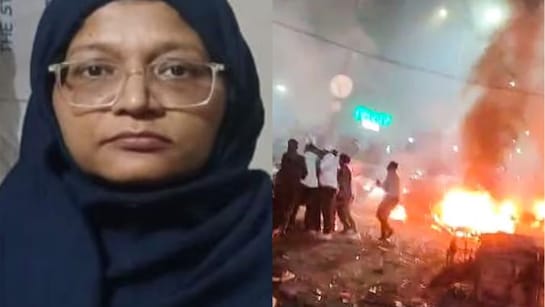
A shocking revelation has emerged from the recent terror module investigations, with the arrest of Dr Shaheen Shahid, a former medical college lecturer from Lucknow, accused of heading the Indian wing of the Jaish-e-Mohammed (JeM) women’s outfit. Her arrest adds to the growing list of educated professionals, including doctors, allegedly involved in terror-linked activities, raising serious concerns about radicalisation among the educated elite.
The Arrest and Investigation
According to investigative agencies, Dr Shaheen Shahid was arrested following a series of coordinated raids across several cities, including Lucknow, Delhi, and Faridabad. These raids were carried out after the arrest of a group of individuals suspected of being part of a Jaish-e-Mohammed module operating in northern India.
Authorities allege that Dr Shaheen played a significant role in recruiting women for the banned terror organisation and was in contact with handlers based outside India. Investigators claim she was using her position as a medical lecturer to identify and influence potential recruits, often targeting vulnerable students through online communication and private study sessions.
A Promising Career That Took a Dark Turn
Before her alleged involvement in terrorism, Dr Shaheen had a respectable academic background. She reportedly completed her higher education in medicine and was serving as a lecturer at a private medical college in Lucknow. Colleagues describe her as quiet and academically focused, with little indication of extremist beliefs during her tenure.
However, sources within the investigation suggest that she gradually became influenced by extremist ideologies through online channels. Her digital footprint reportedly shows connections with several individuals already under surveillance for links with foreign-based terror groups. Investigators believe she was radicalised over time and eventually recruited by Jaish operatives to lead a covert network targeting educated youth.
mallorcavipcare.com | updateonsports.com | crankytravel.com
websitesforbetting.com | PiratesGab.com
Role in the Jaish Women’s Network
Authorities have stated that Dr Shaheen was allegedly heading the Indian arm of the Jaish-e-Mohammed women’s recruitment network, responsible for radicalising and training women to support terror activities. Her role reportedly involved online propaganda, recruitment, and logistical coordination for new members.
She is suspected of managing encrypted communication channels where she disseminated extremist material and conducted virtual sessions to indoctrinate followers. Investigators claim that her professional background as a medical lecturer gave her access to social circles that were often perceived as beyond suspicion, making her activities harder to detect.
According to intelligence sources, Dr Shaheen’s group was particularly active in Uttar Pradesh and Delhi NCR, where several young women were allegedly influenced by her messaging. Some were even reportedly offered roles in “humanitarian” or “educational” initiatives that served as a front for recruitment.
Link to the Faridabad Terror Module
Dr Shaheen’s name surfaced during the interrogation of other suspects connected to the Faridabad module, including Dr Mohammad Umar, a doctor associated with Al-Falah Medical College, and Dr Adeel Ahmad Rather from Jammu and Kashmir. Both were previously arrested for alleged ties to Jaish-e-Mohammed and for planning subversive activities in India.
It was based on their statements and recovered digital evidence that investigators traced online communications leading to Dr Shaheen. Subsequent forensic analysis of her devices reportedly revealed encrypted chats, foreign contacts, and digital transfers, which strengthened suspicions of her direct involvement in the recruitment network.
Pattern of Educated Radicalisation
The case has drawn national attention due to a concerning pattern — the growing involvement of educated individuals, particularly doctors, engineers, and teachers, in extremist plots. Dr Shaheen is the fourth medical professional arrested in connection with this particular module, reflecting how radicalisation is no longer confined to any single demographic.
Security experts suggest that the use of educated recruits allows terror outfits to expand their reach and credibility. Highly skilled individuals often bring technical knowledge and professional access that can be exploited for logistics, communication, or covert operations.
An intelligence officer involved in the case noted, “These individuals are not foot soldiers. They are influencers who can manipulate young minds under the guise of education, social work, or faith. That makes them even more dangerous.”
Reactions from the Academic Community
The news of Dr Shaheen’s arrest has stunned the academic and medical community in Lucknow. Former colleagues and students have expressed disbelief, describing her as polite, disciplined, and deeply involved in her teaching responsibilities.
A senior faculty member at her former college said, “It’s hard to believe that someone like her could be involved in such activities. She was an intelligent woman and showed no signs of extremist thinking. If these allegations are true, it’s a tragic waste of potential.”
This case has prompted educational institutions to re-evaluate how they monitor digital activities, guest lectures, and off-campus associations among faculty members to prevent potential radical influences.
Legal Proceedings and Charges
Dr Shaheen has been charged under multiple sections of the Unlawful Activities (Prevention) Act (UAPA) and the Indian Penal Code (IPC) for her alleged role in promoting terror activities, funding, and recruitment. She has been remanded in custody for further interrogation as authorities continue to uncover the full extent of her network.
Investigators are also examining whether she had any financial links with international organisations or received foreign funding to sustain her operations. Early findings indicate that the network she led was structured, with distinct responsibilities assigned to members handling communication, funding, and recruitment.
Government and Security Response
The Ministry of Home Affairs has taken serious note of the growing presence of radical elements in educational circles. Central agencies are now conducting a broader audit of digital activities and communications within professional networks that may be used for recruitment purposes.
Officials emphasise that the case highlights the evolving face of terrorism — one that relies on psychological manipulation, online communication, and professional credibility rather than physical training camps. “Radicalisation today happens through screens, not just in secluded places,” an NIA officer remarked.
Public Concern and Broader Implications
The case of Dr Shaheen has raised deep public concern about how radical ideologies penetrate even the most respected sections of society. Many social commentators point out the urgent need for community-based awareness and early intervention programs to counter extremist narratives, especially among educated youth.
Educational institutions are being urged to incorporate digital literacy and counter-radicalisation awareness programs into their curriculum. Psychologists also stress the importance of open dialogue, as individuals often turn to extremist ideologies when they feel alienated or misunderstood.
Conclusion
The arrest of Dr Shaheen Shahid serves as a disturbing reminder that radicalisation can reach anyone, regardless of profession, education, or background. Her transformation from a respected lecturer to an alleged terror recruiter underscores how extremist organisations continue to evolve their strategies in the digital era.
As the investigation progresses, authorities hope to dismantle the larger network she was part of and prevent more individuals from being drawn into similar paths. Meanwhile, the academic community and law enforcement agencies are left grappling with the uncomfortable reality that the battle against terrorism is increasingly psychological — fought in classrooms, social networks, and online platforms as much as on the ground.