Research groups and telecom laboratories in the United States are actively testing early prototypes designed for sixth-generation (6G) wireless systems. These activities are still in the experimental stage and mainly focus on validating radio concepts, spectrum behavior, and new network control methods. One of the spectrum ranges receiving attention during these trials is the 6 GHz band, which sits between traditional mid-band cellular spectrum and higher millimeter-wave frequencies. So, now let us look into Experimental 6G Testing Using 6 GHz Band Prototypes at United States along with Reliable LTE RF drive test tools in telecom & Cellular RF drive test equipment and Reliable Wireless Survey Software Tools & Wifi site survey software tools in detail.
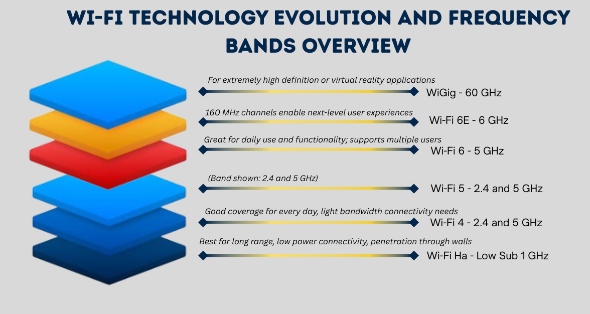
The 6 GHz band is attractive for early experimentation because it offers a balance between coverage and capacity. Lower bands such as 700 MHz or 800 MHz provide wide coverage but limited bandwidth. Millimeter-wave bands above 24 GHz offer very large bandwidth but shorter propagation distance and high signal loss. The 6 GHz range provides moderate propagation distance with significantly larger bandwidth than traditional mid-band spectrum used for 4G and early 5G deployments. For this reason, several U.S. research programs are evaluating whether this band can support high-throughput wireless links required for future 6G services.
Experimental platforms being tested in U.S. laboratories include prototype base stations, software-defined radios, and programmable network cores. These systems allow engineers to modify radio parameters such as channel bandwidth, modulation schemes, and beamforming patterns. By adjusting these variables, researchers can measure how the 6 GHz band performs under different network loads and environmental conditions. Tests typically evaluate throughput, latency, spectral efficiency, and interference levels.
Many experiments use wide channel bandwidths, sometimes exceeding 200 MHz. Larger channel bandwidth allows higher data throughput but also requires improved signal processing and advanced coding techniques. Test systems therefore implement new versions of orthogonal frequency division multiplexing (OFDM), higher-order modulation formats, and adaptive coding schemes. These techniques are necessary to maintain link stability when bandwidth and data rates increase.
Another key focus of these trials is advanced beamforming. Beamforming uses antenna arrays to direct radio energy toward a specific device instead of broadcasting signals equally in all directions. In prototype 6G radios operating in the 6 GHz band, multi-antenna arrays are used to create narrow transmission beams. This approach increases signal strength at the receiver and reduces interference with nearby devices. During testing, engineers measure how well the beams track mobile devices and how quickly the system can adjust beam direction when devices move.
Artificial intelligence models are also being integrated into some experimental platforms. These models assist with dynamic spectrum control, beam selection, and traffic scheduling. During trials, AI algorithms analyze real-time radio measurements and adjust transmission parameters automatically. For example, if interference appears on part of the channel, the system may shift traffic to a cleaner portion of the spectrum. These automated adjustments help maintain stable communication without manual network tuning.
Propagation testing forms another major part of the U.S. 6G research effort. Engineers perform measurements both indoors and outdoors to understand how signals in the 6 GHz band behave in urban, suburban, and campus environments. Compared with millimeter-wave frequencies, signals in this band experience less blockage from walls and foliage. However, attenuation is still higher than traditional sub-3 GHz cellular bands. Data collected during these measurements is used to build propagation models that help predict coverage for future deployments.
Device prototypes used during testing include programmable user equipment modules connected to evaluation boards. These modules simulate future smartphones, sensors, or autonomous systems that may rely on 6G connectivity. Engineers monitor how these devices respond to rapid channel changes, mobility conditions, and varying traffic loads.
Several U.S. university laboratories and telecom research centers are contributing to these experiments through joint research programs supported by federal initiatives and academic partnerships. The goal of these programs is to evaluate radio technologies, network architecture concepts, and spectrum sharing strategies before formal international standards begin development later in the decade.
Although commercial 6G networks are not expected until the end of the 2020s or early 2030s, these experiments provide early data for future system design. By analyzing throughput performance, propagation characteristics, and interference patterns in the 6 GHz band, researchers can determine whether this spectrum range should be included in future 6G deployments.
Results from these prototype tests will influence radio interface design, antenna architecture, and spectrum policy decisions. Continued testing in controlled environments and field trials will gradually shape the technical foundation for the next generation of wireless communication systems.
About RantCell
RantCell is an Android-based mobile network testing and monitoring platform designed for telecom operators, regulators, system integrators, and enterprises.
The platform collects real-time RF and QoE data such as RSRP, RSRQ, SINR, throughput, latency, and call performance, and automatically uploads the results to a cloud-based analytics dashboard. Users can generate reports, analyze coverage, identify problem areas, and monitor network performance across multiple locations. Also read similar articles from here.