Equipment downtime can be a major challenge for businesses that depend on machines, tools, vehicles, HVAC systems, electrical equipment, medical devices, or other critical assets. Unexpected equipment failure can interrupt daily operations, delay customer services, increase repair costs, and reduce productivity.
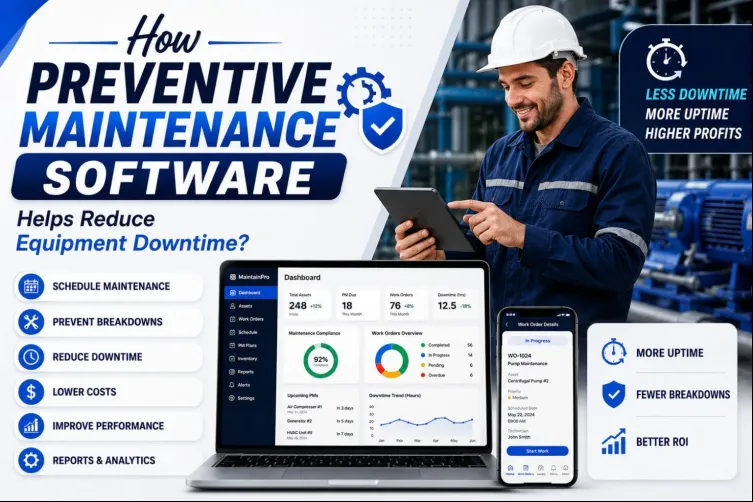
A strong preventive maintenance strategy helps businesses identify potential problems before they become major failures. However, managing preventive maintenance manually through spreadsheets, paper records, calendars, or emails can become difficult as the number of assets increases.
This is where Preventive Maintenance Software can help. It provides a centralized platform for planning maintenance activities, scheduling inspections, assigning technicians, tracking service history, managing spare parts, and monitoring equipment performance. When combined with a Service CRM, it can also connect maintenance operations with customer service and field service management.
What Is Preventive Maintenance Software?
Preventive Maintenance Software is a digital solution designed to help businesses plan and manage regular maintenance activities before equipment breaks down.
Instead of waiting for a machine to fail, maintenance teams can create scheduled inspections, servicing, cleaning, lubrication, calibration, testing, and component replacement tasks based on time intervals, operating hours, usage, or manufacturer recommendations.
The software automatically organizes these activities and provides reminders when maintenance is due. This allows companies to move from reactive maintenance toward a more proactive approach.
Why Preventive Maintenance Is Important?
Rarely do equipment malfunctions happen at a convenient moment. A sudden breakdown can stop production, delay field services, affect customer commitments, and create emergency repair expenses.
Regular preventive maintenance helps businesses identify worn components, unusual performance, and potential faults at an early stage. By addressing these issues before failure occurs, companies can improve equipment reliability and reduce unplanned downtime.
However, preventive maintenance is only effective when maintenance tasks are completed consistently. Preventive Maintenance Scheduling Software helps teams maintain this consistency by automating maintenance schedules and reminders.
How Preventive Maintenance Software Reduces Equipment Downtime?
1. Automates Maintenance Scheduling
One of the most important features of Preventive Maintenance Software is automated scheduling.
Maintenance managers can create recurring tasks based on specific intervals, such as weekly, monthly, quarterly, or annually. Schedules can also be based on equipment usage or operating hours.
Automated reminders notify responsible employees when maintenance activities are approaching. This reduces the possibility of missed maintenance tasks that could eventually lead to equipment failure.
2. Identifies Maintenance Requirements Early
Regular inspections provide opportunities to identify potential equipment problems before they become serious.
Maintenance teams can record inspection results, technician observations, equipment conditions, and recommended actions in the software. Managers can review this information and prioritize repairs before a minor issue develops into a major breakdown.
This proactive strategy can greatly increase the dependability of the equipment.
3. Creates Complete Equipment Service History
A detailed maintenance history helps technicians understand how equipment has performed over time.
Preventive Maintenance Software can store information about previous inspections, repairs, replacement parts, maintenance dates, technician comments, and equipment failures.
When a problem occurs, technicians can review previous records and identify recurring issues. This can help reduce troubleshooting time and improve repair decisions.
4. Improves Technician Scheduling
Maintenance teams may manage hundreds of assets across different departments, facilities, or locations. Assigning maintenance tasks manually can lead to scheduling conflicts and uneven workloads.
Preventive Maintenance Software helps managers assign tasks according to technician availability, skills, location, and workload.
A well-organized schedule ensures that critical maintenance activities are completed on time without unnecessarily disrupting daily operations.
5. Helps Manage Spare Parts
Equipment maintenance often requires replacement components. If the required part is unavailable, repairs may be delayed and equipment downtime can increase.
Maintenance software can track spare parts inventory, stock levels, parts used during service, and purchase requirements.
By knowing which parts are frequently required, businesses can maintain appropriate inventory levels and reduce delays caused by unavailable components.
6. Prioritizes Critical Equipment
Not every piece of equipment has the same operational importance. A failure of a critical machine may have a much greater impact than the failure of a non-essential asset.
Software can help organizations classify assets according to importance, maintenance requirements, and risk. Maintenance teams can then prioritize critical equipment and ensure that high-priority assets receive timely attention.
7. Reduces Emergency Repairs
Reactive maintenance often results in emergency service calls, overtime labor, rush spare-part purchases, and extended equipment downtime.
By scheduling regular inspections and maintenance, businesses can detect potential issues earlier. This reduces dependence on emergency repairs and makes maintenance costs more predictable.
8. Provides Real-Time Maintenance Visibility
Managers need to know which maintenance tasks are completed, pending, overdue, or in progress.
A centralized dashboard provides real-time visibility into maintenance activities. Managers can monitor open tasks, overdue services, technician workloads, equipment conditions, and upcoming maintenance requirements.
This makes it easier to take corrective action before delays affect operations.
Role of Preventive Maintenance Scheduling Software
Preventive Maintenance Scheduling Software focuses on organizing recurring maintenance activities efficiently. It allows businesses to create maintenance plans for individual assets or entire equipment groups.
For example, an HVAC company may schedule filter replacement every month, system inspection every quarter, and comprehensive servicing twice a year. Similarly, a manufacturing company may schedule machine lubrication every week and component inspection every month.
Automated scheduling ensures that these activities remain consistent even when the number of assets increases.
How Service CRM Supports Preventive Maintenance?
A Service CRM can extend preventive maintenance capabilities by connecting equipment maintenance with customer and field service operations.
This is particularly useful for businesses that provide maintenance services to external customers. Service teams can maintain customer profiles, equipment records, service contracts, AMC details, maintenance schedules, service requests, technician assignments, and service history in one platform.
For example, a company managing HVAC systems for commercial customers can store each customer’s equipment information and automatically schedule preventive maintenance visits. When a service date approaches, the system can notify the service team, assign a technician, and track the job until completion.
This creates a connected workflow from customer management to maintenance execution.
Benefits of Preventive Maintenance Software
Implementing preventive maintenance software can provide several benefits:
· Reduced unplanned equipment downtime
· Improved equipment reliability
· Longer asset lifespan
· Better maintenance scheduling
· Faster technician response
· Reduced emergency repair costs
· Better spare parts management
· Centralized service records
· Improved technician productivity
· Better maintenance planning
· Increased operational efficiency
· Improved customer service
These benefits can help organizations build a more predictable and efficient maintenance operation.
Preventive Maintenance Software for Different Industries
Preventive maintenance solutions can be used across many industries.
Manufacturing: Manage production machines, tools, and industrial equipment.
Healthcare: Schedule maintenance and calibration of medical equipment.
HVAC: Manage regular servicing of air-conditioning and ventilation systems.
Solar: Schedule inspections, cleaning, inverter checks, and system maintenance.
Electrical Services: Manage preventive inspections and servicing of electrical equipment.
Facility Management: Track maintenance activities for buildings, utilities, and infrastructure.
Fleet and Transportation: Schedule servicing and inspections for vehicles and related assets.
The flexibility of modern maintenance platforms allows organizations to customize schedules according to their equipment and operational requirements.
How to Choose the Right Preventive Maintenance Software?
Businesses should consider several factors when selecting a maintenance platform. The software should support asset management, recurring maintenance schedules, technician management, service history, spare parts tracking, notifications, reporting, and mobile access.
Integration with a Service CRM can be especially valuable for companies that provide field maintenance services to customers.
A user-friendly interface is also important. Maintenance technicians should be able to access job details and update service records easily from the field.
Conclusion
Unplanned equipment downtime can negatively affect productivity, customer satisfaction, operating costs, and business performance. A proactive maintenance strategy can help organizations identify potential equipment problems before they result in costly failures.
Preventive Maintenance Software provides the tools required to automate maintenance schedules, manage equipment records, assign technicians, track spare parts, and monitor maintenance performance. Meanwhile, Preventive Maintenance Scheduling Software ensures that recurring inspections and service activities are completed on time.
When integrated with FSM Software Service CRM, preventive maintenance becomes part of a complete service management ecosystem. Businesses can connect customers, assets, contracts, technicians, service requests, and maintenance schedules within one centralized platform.
By adopting the right preventive maintenance solution, organizations can reduce unplanned downtime, improve equipment reliability, control maintenance costs, and create more efficient long-term operations.